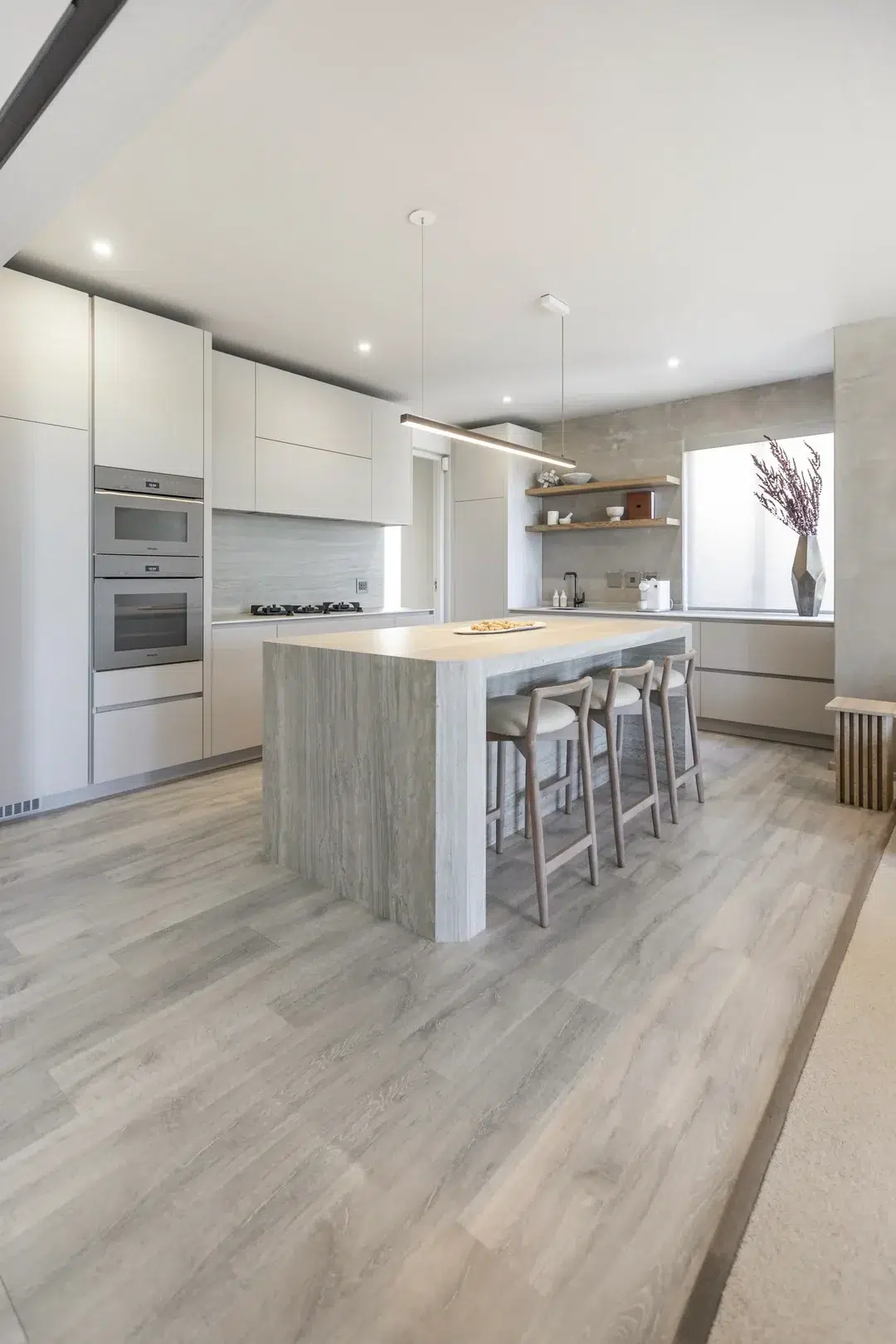
Cabinet fronts, carcasses, worktops and hardware are each chosen separately, and the difference between a good material and a great one shows up over decades of daily use. Here is how to think about the best materials for a luxury kitchen, part by part.
What Are the Best Materials for a Luxury Kitchen?
There is no single answer — the best materials for a luxury kitchen are the ones matched to where they sit and how they’re used. Fronts and visible surfaces prioritise beauty and finish; carcasses prioritise stability and moisture resistance; hardware prioritises longevity. Get each right and the kitchen looks impeccable and stays that way.
Premium boards: German and Italian substrates
High-grade European boards — the kind used across German and Italian cabinetry — are engineered for flatness, density and consistency, which is why they hold precise joinery and fine finishes so well. In South Africa, industry-standard boards such as PG Bison’s MelaWood range set a familiar benchmark, while imported European boards raise it further for the most demanding work.
Natural timber and veneers
Solid timber and real-wood veneers bring warmth and character no print can match. Solid wood, well made, can last generations; a quality veneer over a stable core gives the same natural beauty with excellent dimensional stability — often the smarter choice in a kitchen’s changing humidity.
Hardware: the material you touch every day
Hinges, runners and soft-close mechanisms are used thousands of times a year, so hardware is where quality is felt most. Premium, lifetime-backed systems such as Blum keep doors and drawers running silently and precisely for the life of the kitchen — a hallmark of the best materials for a luxury kitchen.
Melamine vs Veneer vs Solid Wood
The everyday comparison shoppers ask about is finish type:
- Melamine on a premium board — durable, hygienic and beautifully consistent; excellent on a high-grade substrate.
- Real-wood veneer — natural grain and warmth with the stability of an engineered core.
- Solid timber — the most characterful and, with the right craftsmanship, the most enduring.
In a luxury kitchen the answer is usually a considered mix — the right surface in the right place, all built on premium substrates.
Why the Best Materials Are Worth It
Choosing the best materials for a luxury kitchen isn’t about cost — it’s about longevity, performance and how a space feels for decades. Premium boards stay flat and true, natural timbers age gracefully, and lifetime hardware never becomes the weak link. Together they make a kitchen that looks as considered in twenty years as it does on day one.
This is the standard Numu builds to: bespoke cabinetry designed and hand-built in South Africa to European standards, using premium natural timbers and German and Italian boards, Blum hardware, and a single team from first measurement to final fit.
Explore the craftsmanship in Numu’s Kitchens and see completed homes in the Projects portfolio.
Frequently Asked Questions
What are the best materials for a luxury kitchen?
Premium German and Italian boards for stability and finish, natural solid timbers or real-wood veneers for beauty, and lifetime-backed hardware such as Blum — each chosen for where it sits and how it’s used.
Is solid wood better than veneer for kitchen cabinets?
Not always. Solid wood is the most characterful and can last generations, but a quality veneer over a stable core offers the same natural look with better resistance to a kitchen’s humidity changes. The best choice depends on the surface and its position.
Does the board really matter if you can’t see it?
Yes. The carcass and substrate determine how flat, stable and durable the cabinetry is, and how well it holds fine joinery and finishes over time — which is why premium boards are central to the best materials for a luxury kitchen.
Why is quality hardware so important?
Hinges, runners and drawer mechanisms are used constantly. Premium, lifetime-backed hardware keeps everything running silently and precisely for the life of the kitchen, long after cheaper mechanisms would loosen or fail.